You want to take a photo without pulling out your phone, hear directions without earbuds, or ask a quick question while your hands are full. "Smart glasses" sounds like the answer, but the name covers three very different things.
Some glasses have a camera and an assistant. Some are a big private screen that plugs into your phone by cable. Some only play audio. Buy the wrong kind and you get a screen with no camera, or a camera with no screen, and a cable you didn't expect.
We compared five smart glasses across all three kinds. One has a 12 MP camera, open-ear speakers and a built-in assistant, runs wirelessly for up to 8 hours, and comes in clear lenses you can wear all day.
Not sure? Let us pick for you
What do you want your glasses to do?
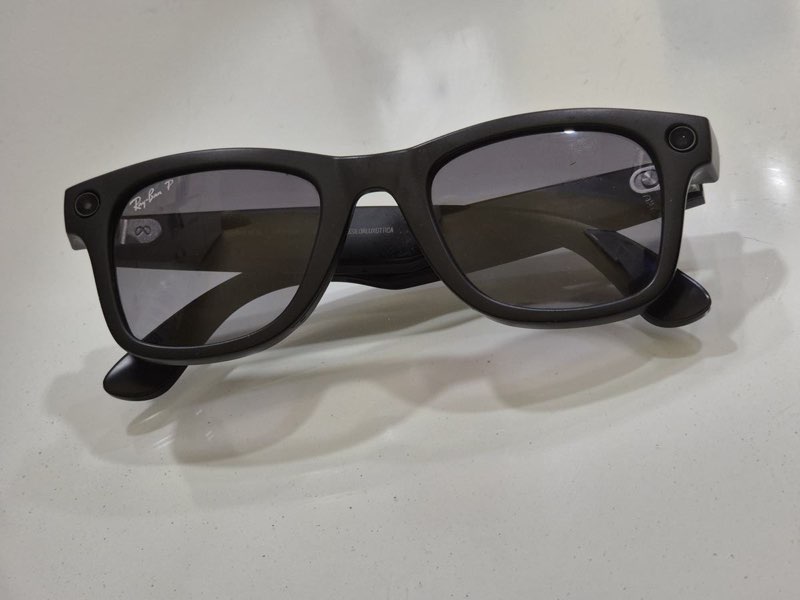
Our pick for you: #1Ray-Ban Meta (Gen 2) Wayfarer, Clear Lenses
A 12 MP ultra-wide camera, open-ear speakers and Meta AI built in, in classic Wayfarer frames.
Classic Wayfarer frames with a 12 MP ultra-wide camera, open-ear speakers and Meta AI. Take photos and video up to 3K, play music, make calls or ask Meta AI questions hands-free. The listing says it can translate conversations in real time. It lasts up to 8 hours with moderate use, and the charging case adds up to 48 hours. You set it up in the Meta AI phone app; the listing doesn't state a paid plan.
12 MP ultra-wide camera (100° view), video up to 3K
Open-ear speakers and hands-free calls; Meta AI built in
Up to 8 hours per charge, plus up to 48 hours from the case
Clear, tinted, blue light or Transitions lenses; Meta lists prescription lenses from -6.00 to +6.00
No display: the listing says it has no screen in the lenses
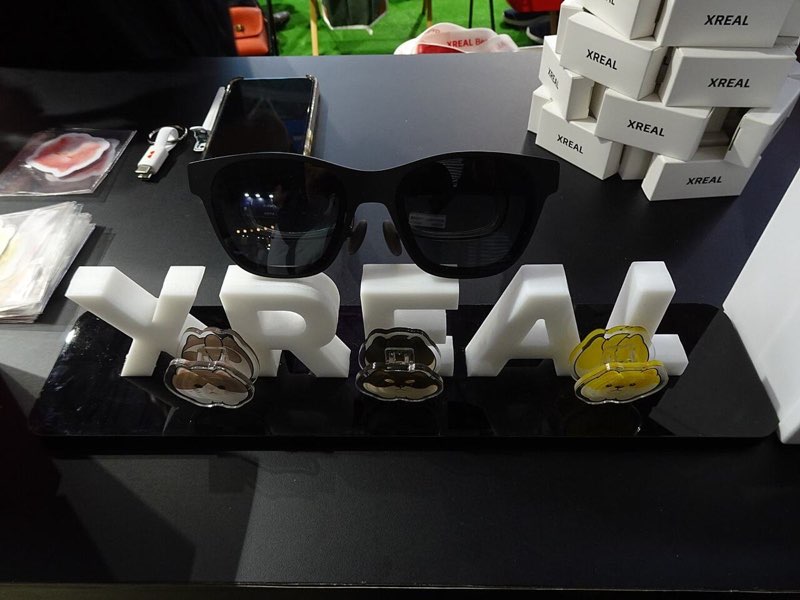
Display glasses that turn a phone, laptop or handheld console with USB-C video output into a private 146-inch, 120Hz, 1080p screen. Two dials adjust focus for each eye from 0 to -5.00, so many nearsighted users can skip inserts, per the listing. It weighs 63 g and comes with a snap-on lens shade. The free SpaceWalker app adds extra screens and 3D modes.
146-inch 1080p virtual screen at 120Hz, Sony Micro-OLED, up to 1600 nits
Built-in 0 to -5.00 focus dials for each eye
63 g, with swappable nose pads and a lens shade in the box
Free SpaceWalker app for iPhone, Android, macOS and Windows
Audio glasses with open-ear speakers and AI translation. Through the OhO app, the listing says it translates in 165 languages with 6 modes, including FreeTalk and Photo Translation, powered by ChatGPT. It lasts up to 10 hours after a 1.5-hour charge. The photochromic lenses go from clear indoors to light gray outside and meet the ANSI Z87.1 safety standard.
165-language translation with 6 modes in the OhO app, per the listing
Up to 10 hours per charge; Bluetooth 5.2
Clear-to-light-gray photochromic lenses, ANSI Z87.1, 36 g
The maker says all its frames take clip-on prescription lenses
No camera: the listing says so
Translation needs the OhO app; whether it has a paid plan isn't stated
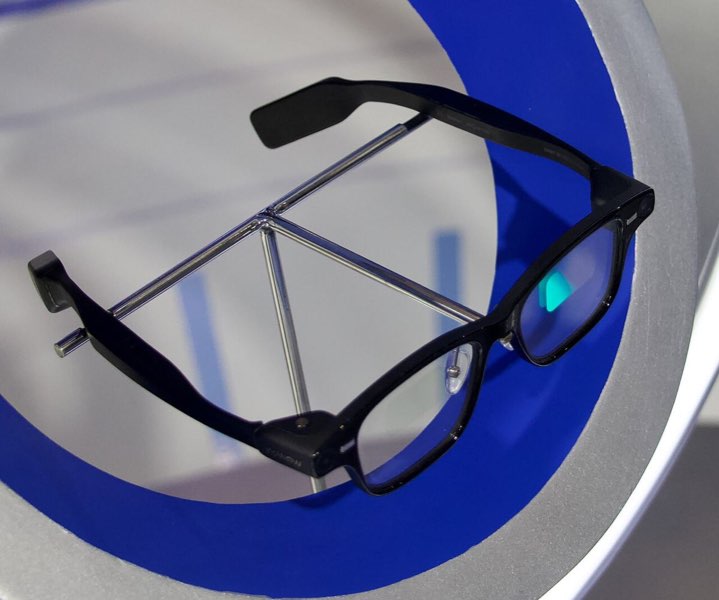
Display glasses with a 201-inch virtual screen (at 6 m) and 1,200 nits of brightness, which the listing calls the brightest in any AR glasses today. It has 6 viewing modes and 20 brightness levels. For nearsighted or astigmatic eyes, it comes with a sample prescription lens to take to a local optician.
201-inch virtual screen, 1,200 nits, 120Hz
Micro-OLED panel with 6 viewing modes and 20 brightness levels
Plugs straight into USB-C phones like iPhone 15 and later
Prescription lens sample included for an optician to copy
No camera
Needs a USB-C cable; iPhone 14 or older and Switch need extra adapters or a hub
Plain audio glasses: open-ear speakers and a built-in mic for music and hands-free calls, with no camera and no screen. The listing says it plays for up to 10 hours per charge and works with Siri and Google Assistant on your phone for calls, music and navigation. The polarized UV400 lenses meet the ANSI Z87.1 safety standard, and the water-resistant frame weighs 1.27 ounces. The listing doesn't mention an app or a paid plan.
Open-ear speakers and a built-in mic for music and hands-free calls
Up to 10 hours of playtime per charge, per the listing
Polarized UV400 lenses, ANSI Z87.1 certified
Water-resistant, 1.27-ounce frame; no app mentioned in the listing
No camera
No assistant of its own; it works with Siri or Google Assistant on your phone
This version has dark sunglass lenses; clear or transition lenses are other options on the listing
The Ray-Ban Meta (Gen 2) is our top pick because it's the only pair here with a camera, open-ear audio and a voice assistant in a frame that looks like ordinary Wayfarers, with no cable to a phone or computer.
Meta AI built in; real-time translation per the listing
Ask questions without your phone
Battery
Up to 8 h; case adds up to 48 h
Lasts a full day out
Lenses
Clear, tinted, blue light or Transitions; prescription -6.00 to +6.00
Works as everyday glasses
1. A camera at eye level
The 12 MP ultra-wide camera takes photos and up to 3K video from where you're looking, with a tap or a voice command.
2. Nothing to plug in
It runs on its own battery for up to 8 hours and connects to your phone over Bluetooth. The case adds up to 48 hours more.
3. An assistant in the frame
Meta AI answers questions, sends messages and, per the listing, translates conversations, all without reaching for your phone.
4. A full day of battery
Up to 8 hours with moderate use, and the charging case adds up to 48 hours more.
5. Can replace your everyday glasses
Clear, tinted, blue light and Transitions lenses are offered, and Meta lists prescription lenses from -6.00 to +6.00.
Who it's for
People who want photos and video without pulling out a phone
Commuters who take calls and listen to music on the move
Glasses wearers, with prescription lenses available
The honest trade-off
No display: the listing says it has no screen in the lenses
How it did on what we compared
Built-in camera
Wireless, no cable to a device
Voice assistant built in
Bottom line
For smart glasses you'll actually wear every day, get the Ray-Ban Meta (Gen 2). If you want a screen in the lenses instead, look at the display glasses above.
Camera glasses take photos and video and talk to an assistant. Display glasses are a big private screen for movies and games. Audio glasses only play sound. No pair here does all three. See our camera vs display glasses guide.
Check for a cable
Display glasses usually have no battery of their own and plug into a phone, laptop or console with USB-C video output. Camera and audio glasses run on their own battery over Bluetooth.
Know the apps and plans
Most smart glasses need a phone app for setup or for AI features. Check which app, and whether any feature you want has a paid plan. None of these listings states one.
Plan for your prescription
Options differ: prescription lenses from the maker, built-in focus dials, an optician-made insert, or clip-on lenses. See our guide to smart glasses with prescription lenses.
Questions about smart glasses
Which smart glasses have a camera and a display?
None of these five. The Ray-Ban Meta has a camera but, per its listing, no display. The VITURE and RayNeo have a screen but no camera.
Can smart glasses translate conversations?
The Ray-Ban Meta listing says it translates conversations in real time, and the OHO AI glasses list 165 languages through the OhO app. Treat it as a travel helper, not a professional interpreter.
Is it legal to record people with camera glasses?
Recording laws and consent rules vary by state and country, and some places ban recording entirely. Check the local rules before you record, and ask people first.
Do smart glasses need a subscription?
None of these listings states a paid plan for core features. Most need a free phone app for setup, AI or translation. Check the app before you buy if a feature matters to you.
Bottom line: the best smart glasses
For most people, the Ray-Ban Meta (Gen 2) is the smart glasses to get: a 12 MP camera, open-ear audio and Meta AI, wireless for up to 8 hours, in clear lenses. Choose the VITURE Pro 2 for a big private screen with built-in focus dials, the OHO AI glasses for translation in many languages, the RayNeo Air 3s Pro for the brightest screen, and the OhO Elite for simple music and calls.
Can You Get Smart Glasses with Prescription Lenses? — Yes, but it works differently by type. How prescription lenses, focus dials, optician inserts and clip-ons work on camera, display and audio smart glasses.