

Personal Item Backpack vs Carry-On: When the Free Bag Is Enough
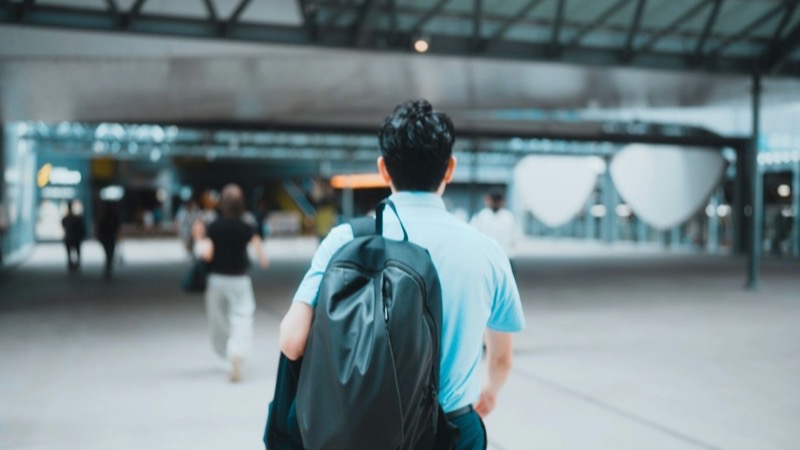
On a basic fare, the personal item is the one bag that flies free. The carry-on costs extra each way, and on some airlines it is not allowed at all on the cheapest ticket. So the real question before a trip is simple: can everything fit in the free bag? Here is how to tell.
The two bags, side by side
- Personal item. Goes under the seat in front of you. The common US limit is 18 x 14 x 8 inches, and the backpacks built for it hold about 25 to 32 litres. United uses a smaller 17 x 10 x 9 inches.
- Carry-on. Goes in the overhead bin. The common US size is 22 x 14 x 9 inches, which is roughly 40 to 45 litres. Many airlines outside the US use a smaller cabin size, around 55 x 40 x 20 cm, and some weigh it.
One bag is about 30 litres, the other about 45. That gap is the whole decision. For the airline-by-airline numbers, see our personal item size by airline guide.
What fits in 30 litres
A 30-litre backpack holds about three days of clothes if you pack with a plan: a few tops, one spare pair of trousers, underwear and socks, a toiletry bag that meets the liquids rule, a laptop and a charger. Our 3-day personal item packing list shows the layout.
Stretch it to four or five days by washing a shirt in the sink, or by wearing the bulkiest items on the plane. The bag is usually not the limit; the willingness to re-wear clothes is.
When you need the carry-on after all
The free bag stops being enough in a few clear cases:
- A week or more with no chance to do laundry.
- Winter trips. A coat, boots and sweaters eat a 30-litre bag on their own, even if you wear the coat on board.
- Bulky gear. A second pair of shoes, a camera body with two lenses, gifts, or anything you cannot roll flat.
- Two people sharing one bag. It does not work past a weekend.
- A tall laptop. Many personal item backpacks stop at a 15.6-inch sleeve. If yours is 17 inches, the bag has to be chosen for it, or the laptop takes the space your clothes needed.
If any of those apply, pay for the bin once rather than paying a surprise fee at the gate. Our carry-on luggage comparison covers suitcases sized for strict airlines.
The middle path: a bag that does both
Some backpacks expand. They come in two kinds, and the difference matters:
- Expands but stays a personal item. The ECOHUB grows from 6 inches deep to 8 inches, from about 22.6 to 30 litres, and at 18 x 12.7 x 8 inches it is still inside the 18 x 14 x 8 limit when fully open. You get the extra room without a fee.
- Expands into a carry-on. The ZOMFELT expandable is 18 x 14 x 8 inches zipped and grows 2 inches to 22 x 14 x 9, the standard carry-on size. Zipped, it rides free under the seat. Open, it needs the overhead bin, and on a basic fare that means a bag fee.
The second kind is the one to buy if your trips vary: a weekend on a basic fare one month, a week with a paid carry-on the next. Just remember which flight is which. An agent who sees the expansion zip open will measure the bag open.
A quick way to decide
- Count the nights. Three or fewer: the personal item alone. Four to five: personal item plus sink laundry. Six or more: carry-on.
- Add the season. Winter pushes a three-night trip into carry-on territory.
- Add anything that cannot be squashed. Shoes, gifts, a big laptop.
- If you are still on the fence, choose an expandable bag and decide when you pack.
The bottom line: a personal item is enough for up to three nights
For a trip of up to three nights in mild weather, a personal item backpack is enough, and it saves a bag fee each way. Longer, colder or bulkier trips need the carry-on. An expandable bag covers both, as long as it is zipped shut when the airline measures it.