

How to Sleep on a Plane as a Side Sleeper
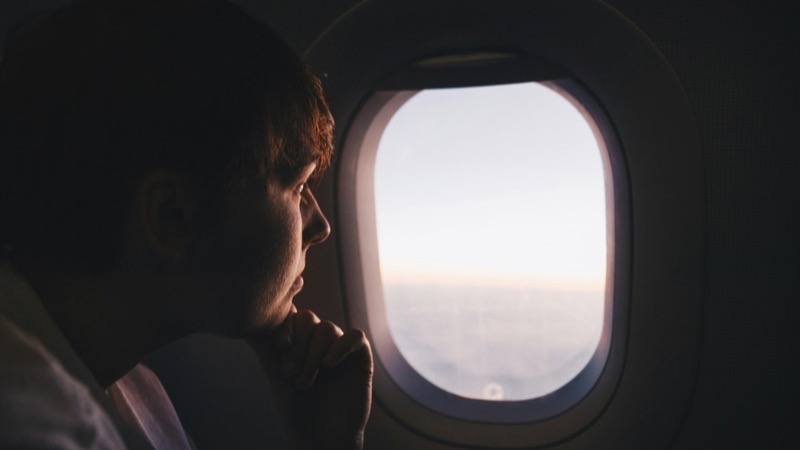
If you sleep on your side at home, an upright plane seat feels wrong. You can't turn over, so your body does the next best thing: your head tips to one side as you doze off, then drops, and the jolt wakes you. The trick isn't to sleep on your back. It's to give your head something solid to lean on, on the side it wants to go.
Book the window seat on the side you sleep on
The window is the side sleeper's seat. You get a wall to lean on, and nobody climbs over you at 3 a.m.
Go one step further: pick the side of the plane that matches the way you sleep. If you sleep on your right side at home, a window seat on the right side of the plane (usually the last letter in the row, like F or K) lets you lean right, onto the wall. If you sleep on your left, take an A seat. It's a small thing, but your neck will thank you after a few hours of leaning the way it's used to.
If you can, skip the last row, which often doesn't recline as far, and the rows next to the toilets and galley, where people and lights come and go all night.
Put a pillow between your head and the wall
The plane wall is hard, cold and curved, and your head will slide down it. A pillow fills the gap between your shoulder and your cheek so your head stays up and your neck isn't bent sharply to the side.
Two setups work well:
- Folded pillow against the wall. Fold a soft travel pillow in half and tuck it between your shoulder and the wall, with your cheek resting on top. BCOZZY calls this the Shoulder Tuck and says its chin-support pillow is made for it.
- A wrap with the support on the lean side. Scarf-style pillows like the Trtl have a stiff support inside. Put it on the side you lean toward, wrap it, and fasten it. The catch: it holds one side at a time, so if you turn the other way, you need to re-wrap it.
Hold your chin, not just your sides
Most side sleepers don't tip only sideways. When you fall asleep sitting up, your head usually rolls to the side and drops forward a little at the same time. A classic U-pillow has soft sides but nothing in front, so your chin falls through the gap.
Look for something that sits under your chin as well: arms that cross at the front, a support you can place under your jaw, or tall sides that cradle your chin. Our comparison of travel pillows for side sleepers checks every pick for this.
Stuck in the aisle or middle seat
No wall means nothing to lean on, and leaning on a stranger is not an option. You have three choices:
- Strap a pillow to your seat. Some pillows, like the Travelrest All-in-One, have a strap that goes around the seat back or over your shoulder, so the pillow stays put and you lean into it.
- Use a pillow with support on both sides. If your head tips toward the aisle, a pillow with raised sides on both sides catches it. A one-sided wrap won't help when you turn the wrong way.
- Lean forward instead. Some travelers put a pillow on the tray table and rest their head on it. It's not side sleeping, but it beats a bobbing head.
Set up before you need it
Side sleepers lose the most sleep in the first hour, while they fidget to find a position. A few habits help:
- Get your pillow out before takeoff. Keep it in your personal item, not the overhead bin.
- Recline a little. Even a few degrees takes weight off your neck when you lean.
- Raise your knees slightly. A bag or footrest under your feet lets you turn your hips a little toward your sleeping side, which feels closer to lying on your side.
- Block the light. A sleep mask helps more than you'd think, because cabin lights and screens wake light sleepers.
- Stay warm. Cabins get cold and a hoodie or blanket helps you settle.
- Buckle your seatbelt over your blanket so the crew can see it and won't wake you.
Don't fight the way you sleep
If you're a side sleeper, trying to sleep straight up with your head back usually fails. Work with it instead: book the window on your sleeping side, put a pillow between your cheek and the wall, and make sure something holds your chin. That setup gets most side sleepers a few real hours of rest, even in economy.