

Are Footrests Allowed on Planes?
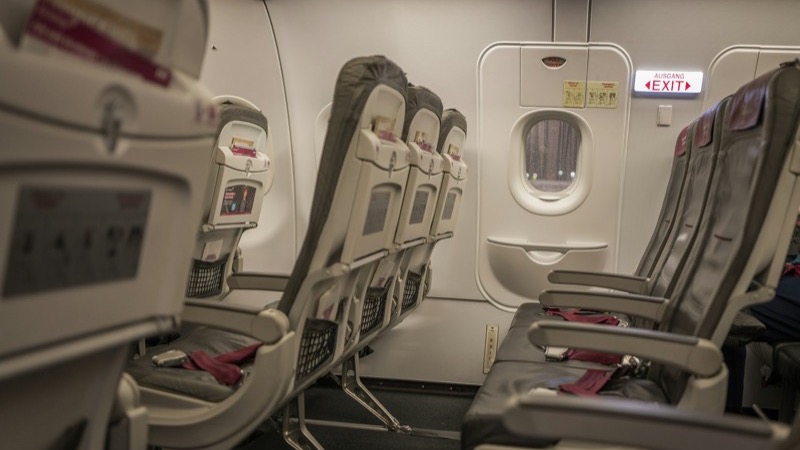
Sometimes. There is no single rule. Each airline decides for itself, and the answer can be different for a foot hammock that hangs from the tray table and an inflatable cushion that sits on the floor. Some airlines ban both, some allow one, and some allow only named products. Here's what we found when we read the airlines' own pages, and how to check yours.
The two kinds of footrest, and why airlines treat them differently
- A foot hammock (or sling) loops its straps around the arms of your tray table. The tray table is part of the seat in front of you, so airlines that ban "anything that attaches to the seat" ban hammocks.
- An inflatable footrest is a cushion that fills the floor space in front of your seat. The worry here is that it can block the way out of the row in an emergency, and that it takes time to deflate when the seatbelt sign comes on.
Both kinds have to be put away for taxi, takeoff and landing on every airline we checked, because the tray table must be stowed and the floor must be clear.
What the airlines say
We read these pages on 5 November 2026. Rules change, so check the live page before you fly.
Delta
Delta's carry-on baggage page has a section called "Comfort Items and Personal Devices." It says that for safety reasons, items that attach to the aircraft (such as seats or windows) aren't allowed, and it specifically lists inflatable devices (wedges, cubes, beds) and foot hammocks and slings as prohibited. What is allowed: comfort items that fit carry-on size limits and can be quickly collapsed and stored under your seat. In plain terms, neither a hammock nor an inflatable footrest is allowed on Delta.
Southwest
Southwest's help center answers this directly. Devices that attach to the aircraft and interfere with or may damage a seat are not permitted, and a personal device must not prevent a seat from reclining, extend into the aisle, put weight loads on the tray table, or stop the tray table from being stowed for taxi, takeoff and landing.
Then it sorts items into groups:
- Can be used in flight, but must be stowed for taxi, takeoff and landing: foot slings, non-medical seat cushions, clip-on fans and reading lights.
- Can be used only in window seats, and must be stowed for taxi, takeoff and landing: inflatable footrests, Flyaway beds, seat extenders, and infant hammocks that attach to the seatback.
So on Southwest a foot hammock is fine once you're in the air, and an inflatable needs a window seat.
British Airways
BA's family seating page lists the only comfort aids approved on board: the Flyaway Kids Plane Bed, Plane Pal, Jet Kids Bed Box, Travel Snug and Kooshy Kids Kushion, each with conditions. The Flyaway and Plane Pal, for example, can't be used in an emergency exit row or an aisle seat, and the Jet Kids Bed Box can't be used in a bulkhead row either. The page says only the items listed are approved and other similar items are not permitted, and that it is not permitted to attach any item to your aircraft seat, including the tray table and armrests. That rules out foot hammocks and generic inflatable footrests on BA.
Qantas
Qantas now welcomes inflatable cubes on board, and says they are the only comfort devices currently approved, so hard-shell bed boxes and leg hammocks have to stay at home. The cube must inflate manually (no battery pumps), have a quick-release valve facing the aisle, fit within the space in front of your seat, and still let you fasten your child's seatbelt. It can only be used in Economy and Premium Economy, never in an exit or bulkhead row, in window seats on narrowbody planes and window or middle seats on widebodies. It must be packed away whenever the seatbelt sign is on.
Air Canada
Air Canada's "Travelling with children" page lists hammock-type seats such as Fly LegsUp among prohibited child restraint devices. It also says infant beds similar to the Flyaway Kids Bed and BedBox cannot block access to the aisle and must be stowed when the seatbelt sign is on. The page doesn't address adult footrests or generic inflatables.
United and American
We couldn't find a page on united.com or aa.com that addresses foot hammocks or inflatable footrests. United's dangerous-items page doesn't mention them. Travel sites report that United has said inflatable footrests aren't allowed, but we didn't see that on United's own site, so ask United before you pack one. The same goes for American.
Why makers warn you too
Even the product listings tell you to check. Sleepy Ride's hammock listing says to check airline policies before buying. The 1st Class Kid inflatable says it isn't recommended for Emirates, Qantas, Air Canada, Air New Zealand or Air France. The Flypal listing says the smaller cushion is generally allowed, while the larger setup may need a window, middle or bulkhead seat.
How to check your own airline
- Search the airline's site for "comfort items," "personal devices" or "inflatable." The rule often sits on the carry-on baggage page or in the help center.
- Look for three things: whether it may attach to the seat or tray table, which seats it can be used in, and whether it must be stowed when the seatbelt sign is on.
- If the page says nothing, ask the airline in writing before you fly. A crew member can still ask you to put a footrest away on the day.
- Never use one in an exit row, and keep it out of the aisle.
The bottom line: it depends on the airline and the type
A foot hammock is the easier case: it's banned where "nothing attaches to the seat," and allowed in flight on airlines like Southwest. An inflatable is banned outright on Delta, limited to window seats on Southwest, and allowed only in specific forms on BA and Qantas. If you fly one airline most of the time, read its page, then pick the type it allows. Our best airplane footrests comparison covers both kinds.